
Exploring the Rich History of Torry's Fish Camp on Namakan Lake

Updated: Apr 9

One of my favorite places to fish, swim or take an afternoon nap when boating through the waterways of Voyageurs National park is a site known as N43: Torry's Fish Camp on Kubel Island in Namakan Lake. Kubel is a larger Island, and on the way to Kettle Falls Hotel for most visitors. What I love is the beautiful sand beach, and short walk upto a shade site with a mix of grass and rocks. As I lay there I think of the history of this area, and far to often we enjoy the modern way of life...here on this site, you need to understand a bite of the history of the area, and the settlers that made this their home long before Voyageurs National Park was ever a thought. Here is one of my favorite stories, told by several publications (Star Tribune, Voyageurs National Park, Voyageurs Concervancy, and Rick Ditzler)
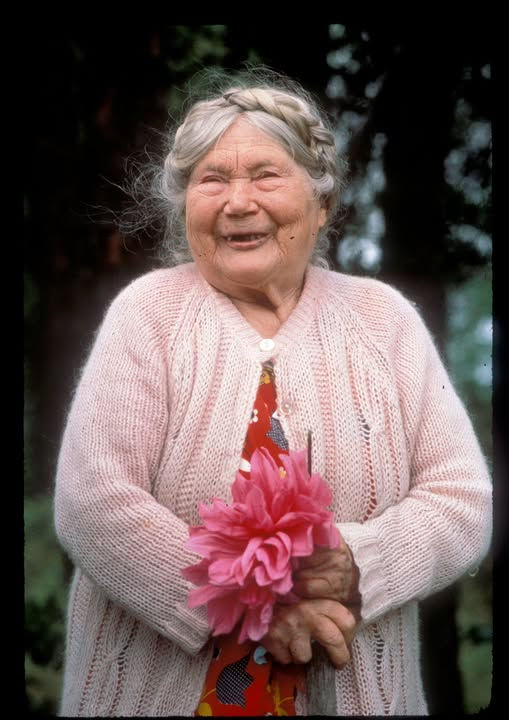
She forever left her home in Finland traveling only with her brother. Arriving in America in the mid-1920s, Lydia Kotiranda would marry immigrant Emil Torry in 1928. A Finnish sailor already living in this country, Lydia would join his life of commercial fishing on northern waters now within Voyageurs National Park.
Their storied lives on Kubel Island in Namakan Lake were rustic and reminiscent of the old world. They had shared 26 years when on the last morning of his life, Emil left their dock for a routine trip to Gappa’s Landing. He would sell his catch to the “fish king,” Dan McCarthy. Never to return, it would be five weeks before the body of Lydia’s husband washed ashore.
Without Emil, alone, this tiny but tough character remained on the isolated island for more than two decades. Year ’round, Lydia continued a solitary life. Familiar trees, rocks, animals and visitors would encourage her. Memories and music as well as books, pets and needlecraft sustained her.
Lydia never went to school and arrived here speaking only Finnish. She taught herself to read English via National Geographic magazines. Intuitively, she learned to play a cherished old organ and a rustic hand-harp made by Emil. Remnants of her bountiful island gardens still exist today.
Torry's Fish Camp on Namakan Lake holds a special place in the story of outdoor adventure and fishing culture in the northern United States and Canada. This historic camp has welcomed generations of anglers, nature lovers, and families seeking a peaceful retreat by the water. Understanding its history reveals not only the evolution of a beloved fishing destination but also the broader story of the region’s natural beauty and recreational development.

N46 Torry's fish campsite in Voyageurs National Park-2024 picture
The Origins of Torry's Fish Camp
There was another Finn living on Kubel Island when Walter had his cabin there. Lydia Torry emigrated around the same time as Walter from Finland with her brother. She traveled with him to Virginia, MN where he worked in the mines. Lydia was introduced to, and wrote letters to another Finnish immigrant, Emil Torry, a commercial fisherman on Namakan Lake. After a year or so of correspondence, he eventually invited Lydia to visit his cabin on Kubel Island, and they later married. Emil died in 1954 when he drowned on Kabatogema Lake. She would continue to live alone in the cabin until the 1980s, always embodying the pioneering spirit of the immigrants from Finland.
Lydia remarked that Namakan Lake “almost looked like my old country”. Its rocky islands and forests reminded her of Finland, and of the home she left as a young girl. She raised rabbits, chickens, and grew vegetables on her corner of the rocky island, surviving alone on the island for much of the rest of her life. Eventually, poor health would force her into an assisted living facility in town.

Lydia’s fish house and ice house were knocked down in a storm years ago, and her cabin no longer looks out over Namakan Lake, but her story is there to inspire and amaze us to this day. Nearby, a campsite named Torry Fish Camp was built with funds from Lydia Torry’s estate. Here, visitors camp on the same island she called home, surrounded by the same trees, stars, and sounds of nature that kept her company all those years ago.
Lydia immigrated to America and arrived in New York with her older brother, Moses (Jr), on May 9, 1909. Because the Finnish “W” is pronounced like a “V”, in early records their surname in American records often appears as “Vasara”. They made their way to Virgina, St. Louis County, Minnesota where Moses worked at an iron ore mine at least until 1911 when he filed his “first papers” to become an American citizen. By the time the U.S. entered World War I, Moses’ draft registration card revealed that he had moved east to Fitchburg, Worchester County, Massachusetts, where he was still single and employed at a papermaking plant. By 1919 he had married (Mary) as recorded in the 1940 U.S. Census. They had two children: Reino Moses (1918-1959) and Lauri Walmis (1922-1979). Moses Jr. died on October 1, 1959 in Westminster, Worcester, Massachusetts.
In 1915, Lydia’s youngest sibling, Jenny Alina, immigrated to America and in March, 1922, married Sam Koski (Koskinen) in Fort Frances, Ontario, Canada – just across the river from International Falls, Minnesota. A November, 1976 Associated Press feature story about Lydia said that she moved to Namakan Lake in 1924. See the article at the top of the page with photo at the following link: https://www.ancestry.com/interactive/50273/NEWS-VA-TH_BE.1976_11_18-0013 Jenny’s husband, Sam, remained in touch with Lydia all his life. In 1987 his son, Gilbert Samuel, was the informant on Lydia’s death certificate. Lydia’s obituary in International Falls’ The Daily Journal cited Jenny and Sam, their son Gilbert Samuel (Iva Mae), and their children as her survivors.
In March, 1924 Lydia’s future husband, Emil Torry (Torri) stated on his Naturalization “first Papers” that he had arrived in Boston in December, 1920, and was now residing near Ray, Minnesota, which is just south of International Falls. He stated that he was single. Ray was the closest Post Office to Kubel Island, Namakan Lake, so he may have already been living there. Lydia recalls that she began long distance correspondence with Emil based on a letter from “some lady”, but it is logical to assume that lady was either Jenny or an acquaintance of hers, given their proximity to the town of Ray and The Rainy Lake watershed.
Emil’s story was a little more complicated than his Naturalization papers indicated. He had been an able bodied seaman on merchant vessels for years sailing all around the world. During World War I he had a portion of his skull blown away, perhaps from an exploding mine, and required silver mesh plates permanently installed to repair his skull. He received a Mercantile Marine Medal and British Medal from England after the war. He continued sailing at least until 1921, as documented on U.S. Immigration manifests of Alien Crew Members on Vessels entering U.S. ports.
In 1976, Mary Lou Pearson, Voyageurs National Park Historian, conducted two interviews with Lydia about her life story that were tape recorded and later transcribed into a 45 page typewritten report. While that report is not posted online, it is available from the Park for educational purposes. Since Lydia never attended school and self-taught English by reading National Geographic magazines while living in isolation on Kubel Island, one can imagine that her accent and sentence structure were a challenge for any non-Finnish speaker to interpret. A new effort to translate some of the questionable phrases is being coordinated by VNP Collections Manager Catherine Crawford.
The more recent newspaper feature story about Lydia in the Minneapolis Star Tribune provided other details of her life gleaned from the two interviews conducted in 1976. http://www.startribune.com/finnish-migr-made-minnesota-island-her-home/505941732/

One statement made by Lydia in her 1976 interview and repeated in this article is that her maiden name was “Kotiranta”. This conflicts with solid documentation of her family surname of “Wasara” in Finland and her and her brother’s immigration records in America. However, a marriage of a Aina Lyydia Kotiranta to Salomon Evert Aijala is recorded in the Minnesota Official Marriage System (MOMS) in Virginia, Minnesota on April 11, 1911 – where her brother lived and worked at the time. This and the lack of any subsequent records suggests that Lydia may have married a Kotiranta between her arrival in America in 1909 and her 1911 wedding to Aijala, and that both marriages ended quickly.

The photograph in the Star Tribune article of Lydia holding her homemade bowed harp tells only part of the story. In her 1976 interview, Lydia recounts in the 1940’s the first closed-cabin, inboard boat on Namakan Lake, the “Colonia” (Columbia?), exploded with such force that groceries it carried were hurled up onto an adjacent hillside. From Lydia’s desription the boat had the first inboard engine used on the lake. Apparently gasoline fumes from the engine built up below deck and somehow ignited. The 5 or 6 occupants of the boat all survived, including several ladies who spent the evening warming up in the Torry’s cabin. The boat was made of mahogany, so the resourceful Emil salvaged boards to construct a one-string harp (lyre) and bow as a present for Lydia. The instrument was likely his variation on a Finnish Jouhikko, normally a 2 or 3-stringed bowed lyre popular in the Karelia region of Finland where Emil grew up.
Emil drowned while crossing Namakan Lake in his boat on October 4, 1954. Lydia recalled in 1976 that his health had been generally failing and that he suffered from diabetes. While his empty boat was found the next day, his body was not recovered until November 8, 1954. He was interred at Forest Hill Cemetery, International Falls.
Lydia retired to the Falls Care Center in International Falls in 1980 and passed away on February 23, 1987 after a lengthy illness. Her only known living relatives in North America are Gilbert Samuel Koski’s descendants in Canada.
*this article is generated from several other stories, using Voyageurs National Park historical resources, and an article from the Minneapolis Tribune. Ranger Rick Ditzler wrote an article in called Homesteaders from Finland in Voyageurs https://www.voyageurs.org/news/finlandhomesteaders.
Some content was personal knowledge and opinion from being on Kubel island, and visiting Torry's Fish Camp site in Voyageurs National Park.
*Thanks for reading, I would love your hear about your experience in the area or with your knowledge of Lydia, Torry's Fish Camp, or experiences camping/travelling in Namakan Lake.
Wade Watson
Voyageurs Adventures/Owner-Guide


Comments